School Management
How to choose a 1:1 tutor for a pupil with SEND: a checklist for SENCOs
TL;DR: Choosing a 1:1 tutor for a pupil with SEND means looking at safeguarding first, then relevant experience, communication style and how well the tutor understands the pupil's plan. A short, structured conversation helps you compare candidates fairly. This checklist covers what to ask and what to check.
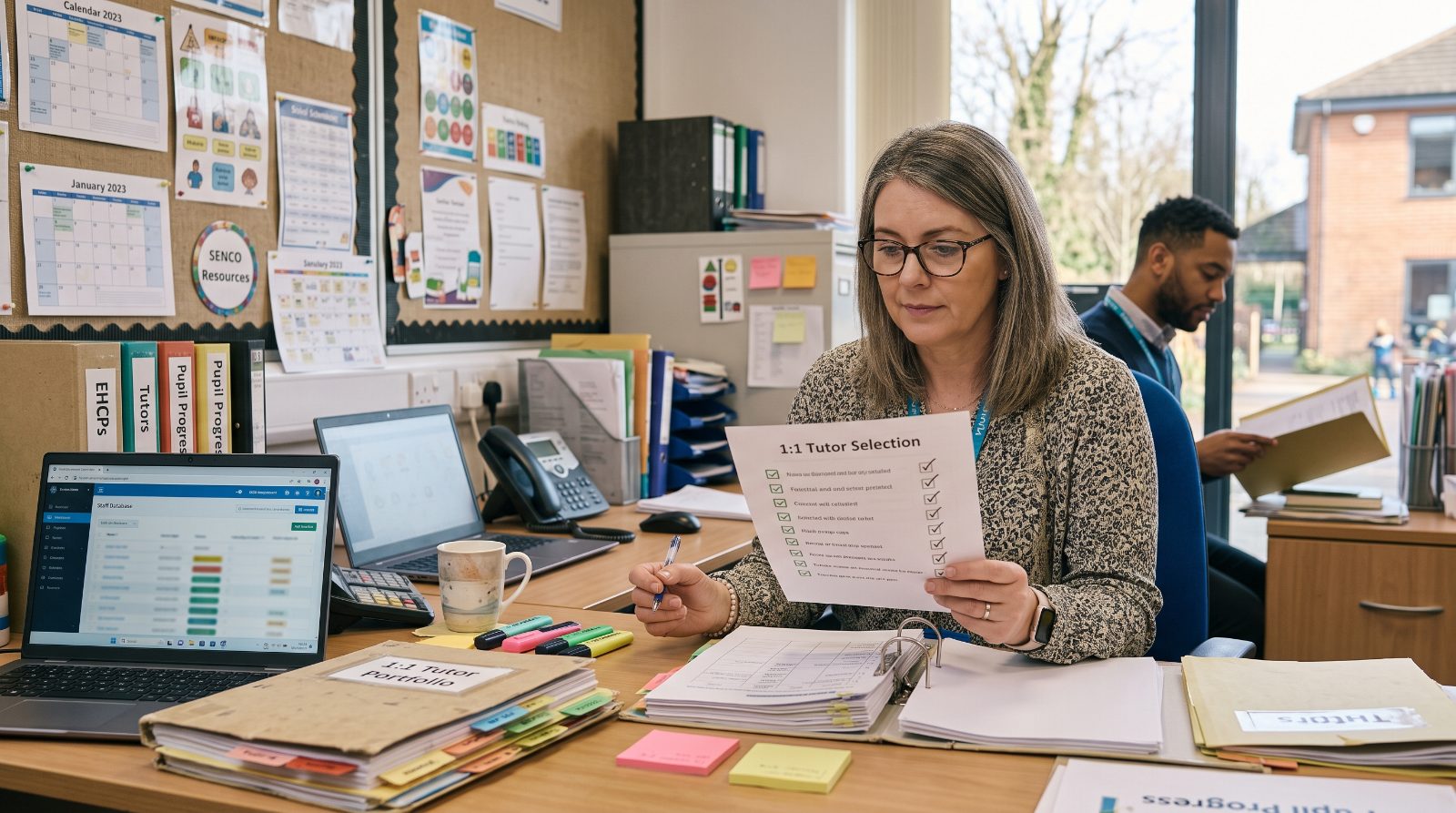
Choosing a 1:1 tutor for a pupil with SEND is a decision that affects the pupil's confidence, their progress and their sense of safety. For SENCOs, it can also feel like a lot to weigh up at once. Qualifications, experience, availability and personality all play a part.
This checklist breaks the decision into clear steps, so that you can compare candidates fairly and feel confident that the person you choose is right for the pupil in front of you.
Start with safeguarding
Before anything else, confirm that the safeguarding basics are in place. Check that the tutor has a current enhanced DBS check, that their identity has been verified, that references have been taken up and that their qualifications have been reviewed. If you are working with a partner, ask them to confirm how each of these checks is carried out and recorded.
Make sure the tutor understands your safeguarding and child protection policy, knows who the designated safeguarding lead is and knows how to report a concern. These conversations should happen before the first session, not after.
Look at relevant experience, not just qualifications
Qualified teacher status is helpful but is not the only measure of suitability. Some tutors have a degree, strong subject knowledge and years of experience with children, and may work very well with a particular pupil. Ask about their experience with the specific needs in the plan, such as autism, ADHD, dyslexia, speech and language difficulties or social, emotional and mental health needs.
Ask for an example. How did they help a pupil who found it hard to start work? What did they do when a session was not going to plan? Practical stories tell you more than a list of courses.
Check communication and style
The best match is often the person who communicates in a way the pupil finds comfortable. Some pupils prefer a quiet, structured approach, while others respond to humour and movement. Think about the pupil's sensory needs, how they cope with change and who they feel safe with.
Consider how the tutor will communicate with you and with the family. Will they send a short note after each session? Will they flag concerns quickly? Clear, regular communication is a sign of a reliable tutor.
Compare candidates fairly
A short, consistent set of questions helps you compare people. Ask each candidate about their experience, how they would plan the first few sessions, how they would build rapport and how they would track progress. Note their answers and compare them against the outcomes in the pupil's plan.
Questions to ask the tutor
- •What experience do you have with this type of need?
- •How will you plan the first few sessions?
- •How will you build trust with the pupil?
- •How will you share progress with us?
Things to confirm in writing
- •Enhanced DBS and ID verification
- •References and qualification review
- •Session location, days and times
- •Funding approval and who to invoice
Think about practicalities
Check availability, travel and the session location. A tutor who can offer consistent days and times gives the pupil a predictable routine, which many pupils with SEND find reassuring. Agree what will happen if a session needs to be rearranged, and who will tell the pupil and family.
After the first few sessions
Choosing a tutor is the start rather than the end of the process. After the first two or three sessions, check in with the pupil, the family and the tutor. Ask the pupil how they feel about the sessions, and look at the tutor's notes to see whether the approach is working. If something is not right, speak up early. A small change, such as moving the time of day or adjusting the setting, can make a big difference, and a good tutor will welcome the feedback.
Making the final decision
Bring together what you have learned: safeguarding, experience, communication and fit with the plan. If possible, include the pupil and family in a short introduction before the first session. A good match often becomes clear when people meet. Humly can help you find suitably checked tutors and talk through the details, so that you can focus on what matters most for the pupil.
Find a tutor who fits the pupil
Share what the pupil needs and we will help you find a suitably checked match.
Explore tuition for schools